
BetPortal’s Take: Cluster Pays vs Paylines: What’s the Difference?
A lot of players assume every slot machine pays out the same way: line up matching symbols on a straight row and collect a prize. That’s a myth. Modern slot design has split into at least two very different payout philosophies, and mixing them up can leave you confused about why a game behaves the way it does. The two most common systems you’ll run into are cluster pays and paylines, and they reward completely different patterns on the reels.
Below is a side-by-side look at how cluster pays and paylines actually work, where each one shows up, and why the distinction matters more than most players realize. This is purely mechanical, informational content — nothing here suggests either format is more likely to produce a win, since outcomes in both formats are governed by random number generators.
Common Misconceptions
The biggest misconception is that cluster pays is just “paylines with extra steps.” In reality, the two systems calculate wins in fundamentally different ways, and treating them as interchangeable can make a game’s paytable feel confusing when it shouldn’t.
Another common myth is that more paylines always mean better odds, or that cluster pays games are automatically more volatile. Neither claim holds up once you look at how the math actually works underneath the presentation layer.
- Myth: Cluster pays is a newer, “upgraded” version of paylines — they’re parallel systems that developers choose based on grid shape and visual theme, not a linear progression from one to the other.
- Myth: Ways-to-win and cluster pays are the same thing — ways-to-win still counts symbols across reels left to right, while cluster pays ignores reel position entirely and looks at adjacency.
- Myth: A game with 25 paylines pays more often than one with 10 — payline count changes the number of possible patterns, not the underlying return-to-player figure built into the math model.
- Myth: Cluster pays grids can’t have paylines at all — some hybrid titles blend cluster mechanics with bonus-triggering lines, though pure cluster games skip lines entirely.
Understanding these distinctions is one of the simpler pieces of casino tips knowledge a player can pick up, because it changes what you should actually be reading on a paytable before you spin.
The Big Picture
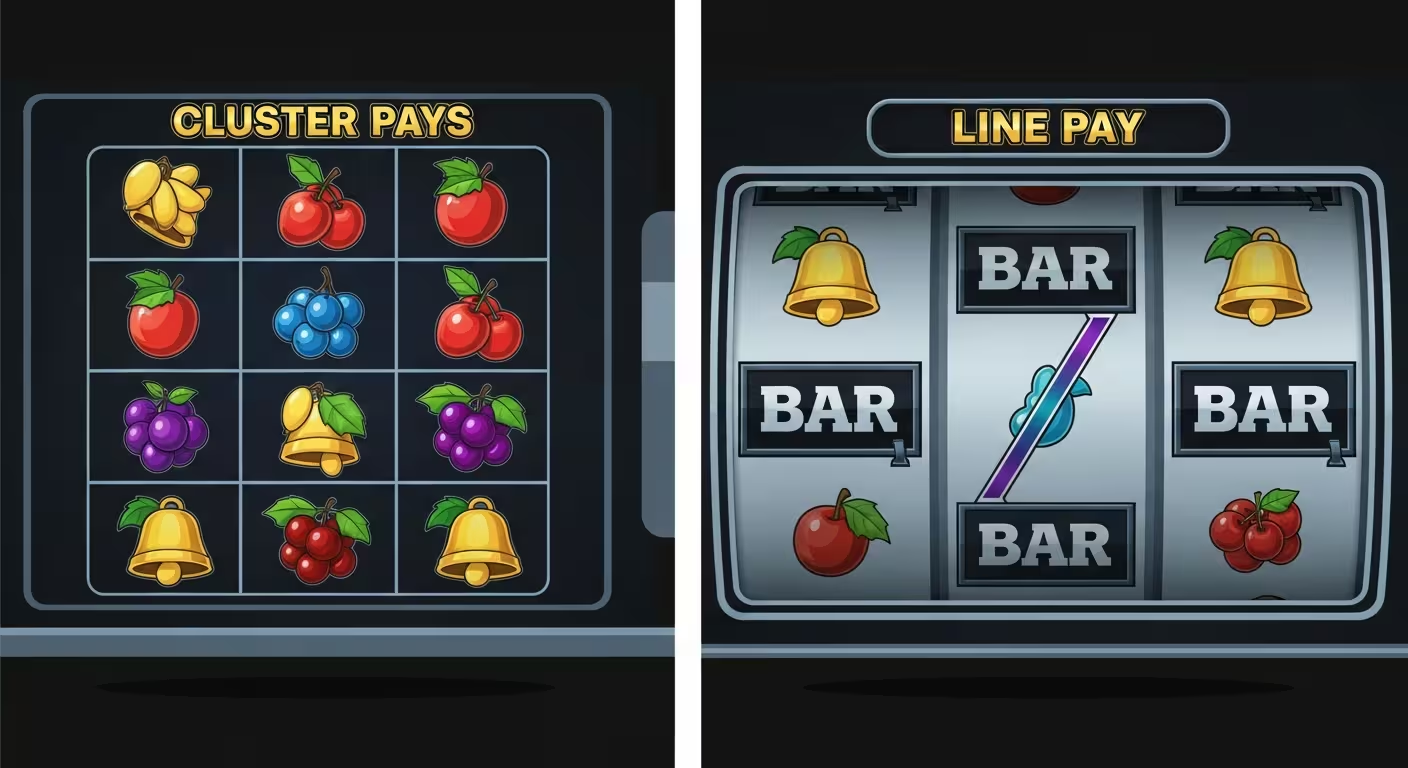
Paylines are the traditional format most players grew up with. A payline is a fixed path — straight, zigzag, or diagonal — that runs across the reels. Matching symbols along that specific path, usually starting from the leftmost reel, triggers a payout. Classic three-reel slots might have a single payline, while modern video slots can carry anywhere from 9 to several hundred fixed or adjustable lines.
Cluster pays works differently. Instead of following a line, the game looks for groups of matching symbols that touch each other, usually horizontally or vertically, anywhere on the grid. Once a cluster reaches a minimum size — often five or more connected symbols — it pays out, and the winning symbols are typically removed so new ones can cascade down and potentially create additional clusters in the same spin.
The table below summarizes the practical differences between the two formats, including a hybrid “ways-to-win” format that often gets lumped in with both.
| Option | Best For | Drawbacks |
|---|---|---|
| Paylines | Players who want a familiar, easy-to-scan layout | Fixed paths can feel rigid on wider grids |
| Cluster Pays | Grid-based slots with cascading, high-variance visuals | Harder to judge win potential at a glance |
| Ways-to-Win | Middle ground between structure and flexibility | Symbol order across reels still matters |
Notice that cluster pays is the option best suited to the cascading, grid-heavy visual style that’s become popular in recent years, largely because removing winning clusters and dropping new symbols into the gaps is a natural fit for a square or rectangular grid rather than a reel-based layout.
Paylines, meanwhile, remain the most beginner-friendly format because the paytable can show you exactly which symbol combination triggered a win and where. That transparency is part of why classic and retro-styled slots still lean on payline structures rather than clusters.
Why This Matters
Knowing whether a game uses cluster pays or paylines changes how you read the paytable before you ever place a bet. A payline game will list specific symbol combinations per line; a cluster pays game will instead list a minimum cluster size and the payout multiplier tied to it.
It also affects how a session feels moment to moment. Cluster pays games often use cascading reels, which can produce chains of small wins from a single spin, while payline games tend to resolve in one clean evaluation per spin. Neither pattern says anything about long-term outcomes — every spin in both formats is still an independent, random event.
- Paytable literacy — knowing the format tells you what information to look for before you spin, rather than guessing at how a win formed.
- Grid awareness — cluster pays games are almost always presented on a square or near-square grid, so the visual layout itself is a quick clue to the mechanic in play.
- Bonus feature context — cascading wins, multipliers on consecutive clusters, and expanding grids are features you’ll mostly find attached to cluster pays titles.
- Budgeting your session — understanding how a game resolves wins is a practical piece of casino tips guidance that helps you set realistic expectations for pacing, not results.
Players at BetPortal browsing the game library will notice both formats represented across different providers and themes. Filtering by mechanic, when that option is available, can save time if you already know you prefer one style over the other.
It’s worth repeating that none of this is predictive. Cluster pays and paylines are presentation and calculation systems, not indicators of hot or cold streaks, and no amount of format knowledge changes the randomness behind each spin.
Final Thoughts
Cluster pays and paylines are simply two different ways of answering the same question: which symbols count as a win? Paylines answer it with fixed paths across the reels, while cluster pays answers it with groups of adjacent matching symbols anywhere on the grid.
Neither format is objectively better — they suit different visual styles and different kinds of games. A retro three-reel slot wouldn’t make much sense as a cluster pays title, just as a dense cascading grid slot wouldn’t translate well into a handful of straight paylines.
The most useful casino tips takeaway here is simple: read the paytable before you play, and know which mechanic you’re looking at so the information in front of you actually makes sense. That small habit turns a confusing paytable into a quick, informative check.
For players who want to explore both formats side by side, BetPortal’s library includes a mix of classic payline slots and modern cluster pays titles, and you can always browse games to compare them directly. If you’re weighing where to start, it’s also worth taking a look at see bonuses before diving into a new title, purely as part of setting up a session responsibly.